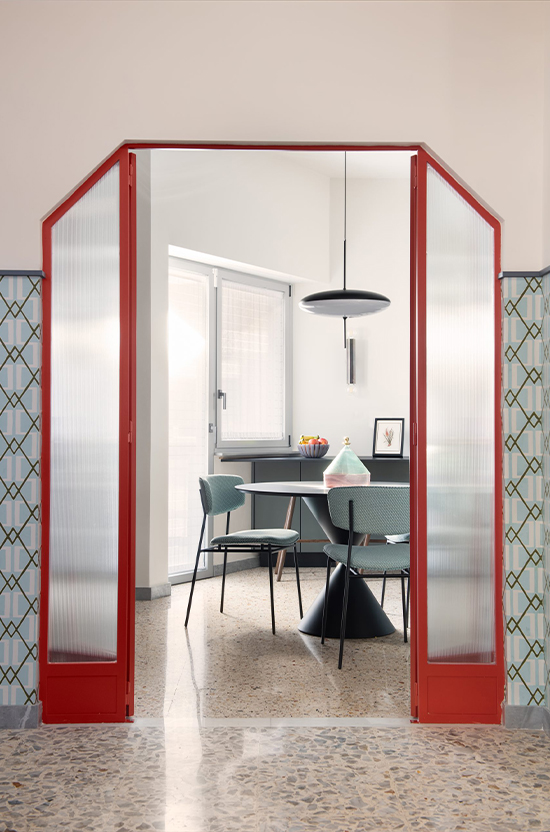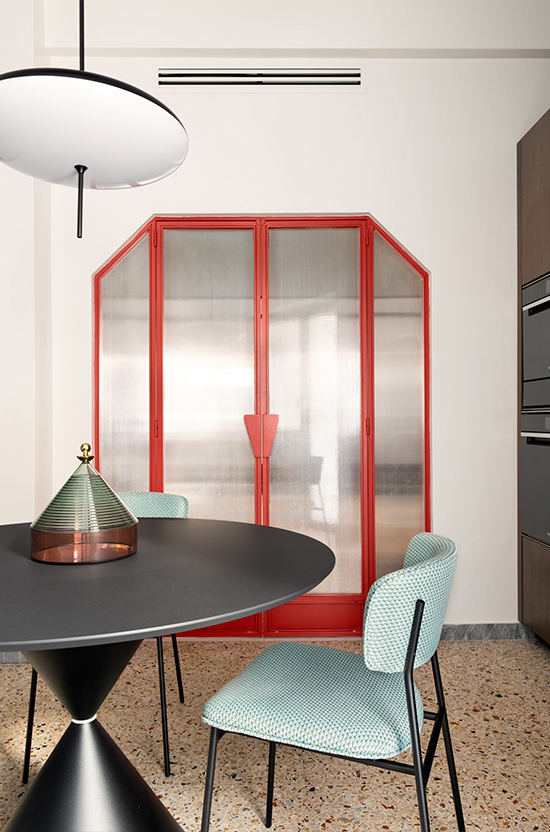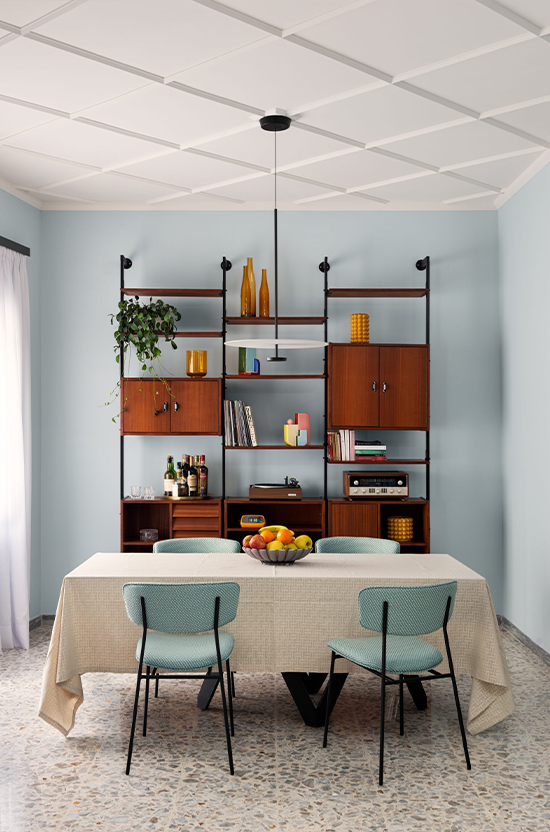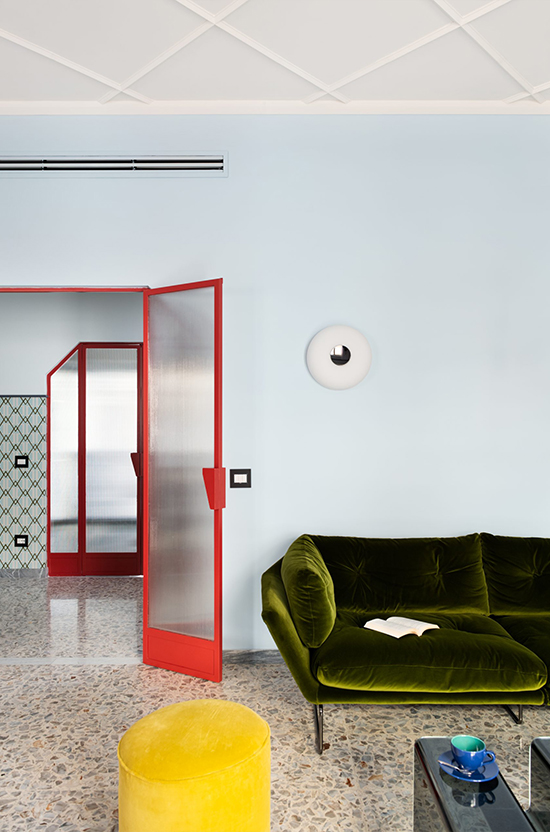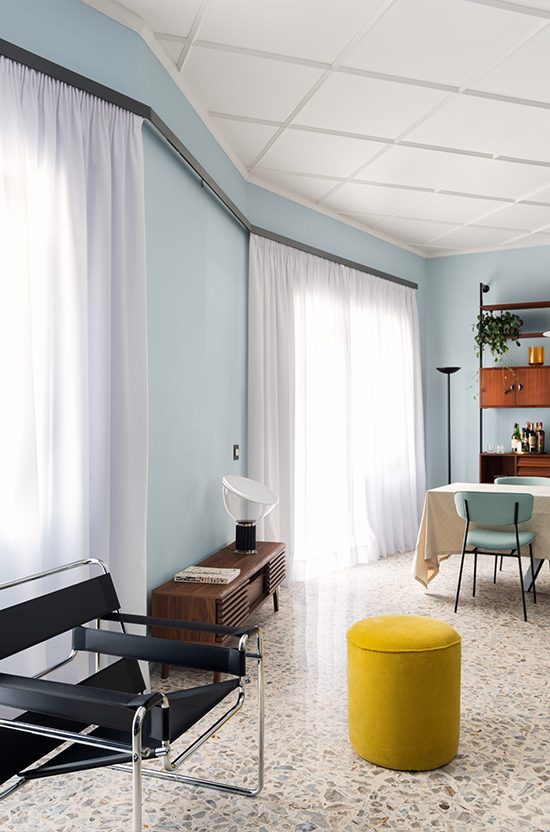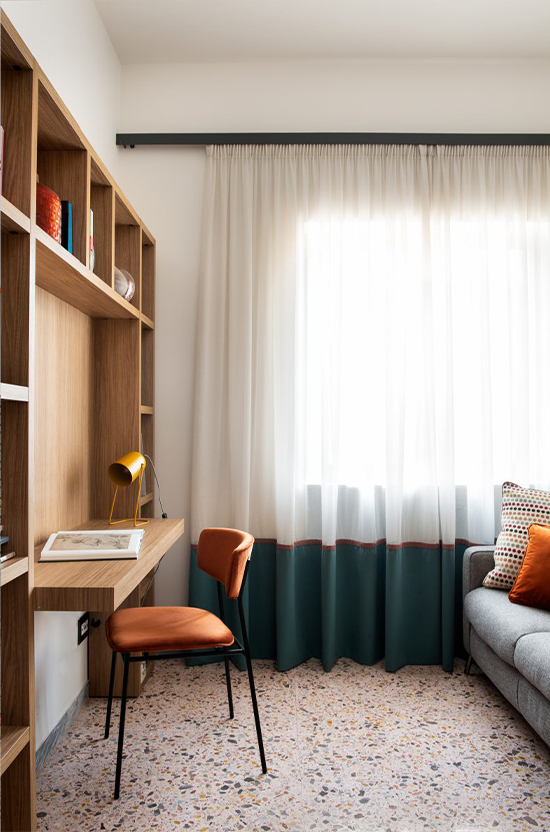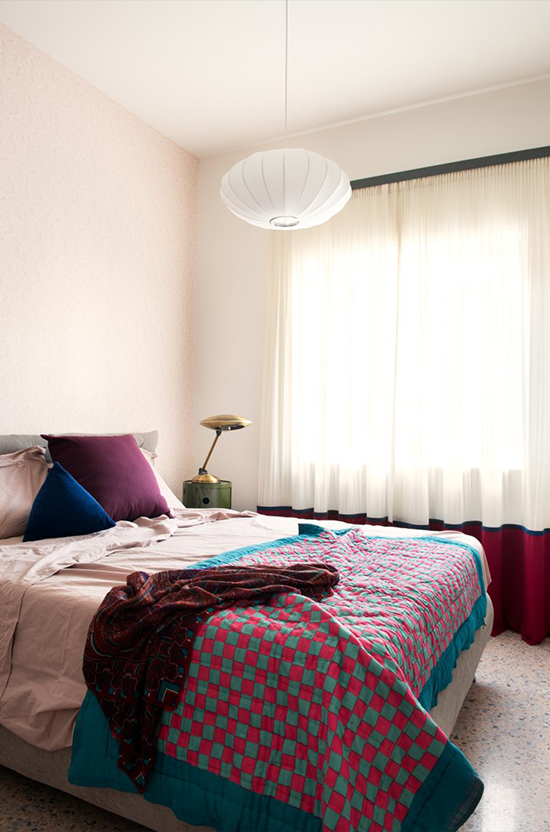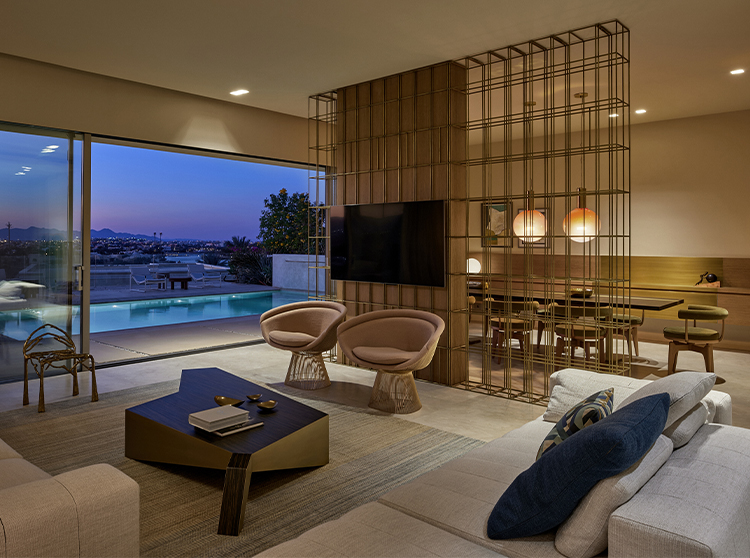










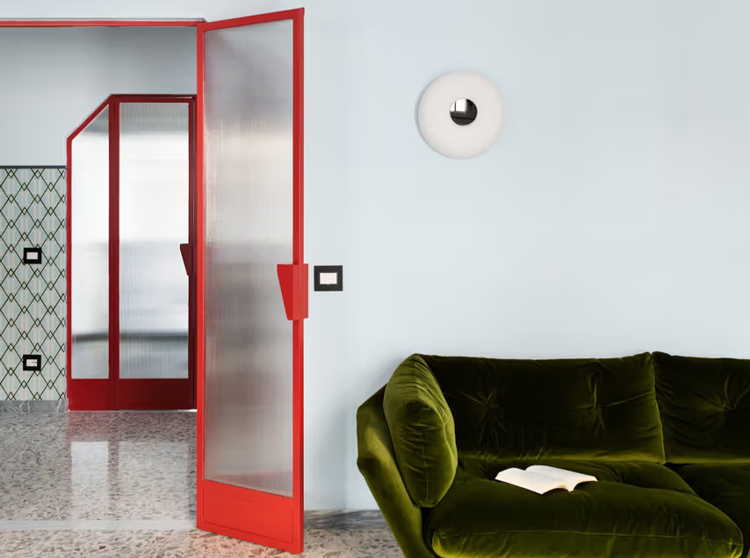
We are in the Conca D’Oro area, a densely populated neighborhood built after World War II north of the Aniene River, where we oversaw the renovation of a 130 m2 apartment. Four-story building from the 1960s, with a curtain wall façade and cruciform-headed concrete pillars supporting the large canopy on the first floor. The main distribution axis is interrupted by an orthogonal junction, marked by two diamond-shaped openings. Inside, twin windows in red “Chinese lacquer” connect the two sides of the building, creating an unexpected visual and spatial connection. The original marble flooring, retained and enhanced, as well as the Bardiglio stone skirting, shaped the living area’s color palette: shades of cerulean and dusty gray form the neutral base of the space, including the walls, against which the furnishings and decorative elements stand out. Instead, it is the broken shape of the façade, clearly visible in the living room, that suggests the use of the dense plaster mesh on the ceiling as an ornamental solution to give density to an irregular and dispersive spatiality.
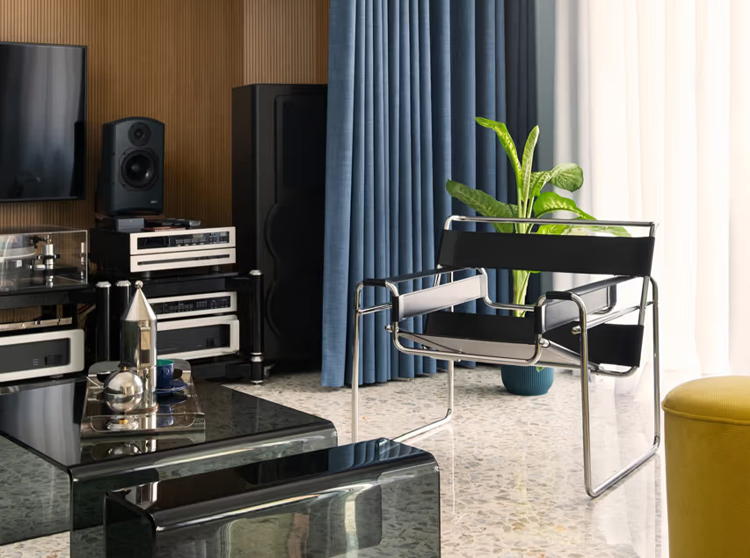
At the back of the room, behind a fabric curtain, we find a backdrop covered with acoustic panels that embraces a high-fidelity music reproduction system, a passion of the owners. The guest bathroom, preceded by a laundry area with sliding oak cabinets, features the warm, autumnal tones of the terrazzo flooring, complemented by the rust-colored ceramic tiles, the peach-colored walls, and the natural brass fixtures. The result is a welcoming and romantic space reminiscent of the 1960s. The second bathroom, on the other hand, is characterized by a geometric and chromatic rigor made of cool tones and accentuated contrasts. An almost clinical atmosphere, which finds its value, even aesthetically, in its extreme functional clarity. The result is a measured apartment, where the interventions, though profound, appear natural, the fruit of the relationship we have had with the architectural object from the beginning, exploring its qualities and embracing its resistances while always respecting its identity.